Facebook pixel

Breaks at work: why small moments of activity make a big difference

Taking breaks at work is often treated as something you earn after long periods of focus. In reality, taking breaks is what makes focus possible in the first place.

As work has become more sedentary and mentally demanding, many employees end the day drained. Not just tired from work tasks, but low on energy even after the workday ends. This is where taking breaks at work plays a much bigger role than most organisations realise.

Well-timed breaks, especially those that include light activity, support recovery during the day and help people have more energy left for life after work.

Why taking breaks at work matters more than ever

Knowledge work rarely looks physically demanding, but it puts constant strain on the nervous system. Long periods of sitting, screen time, and cognitive load keep the body and brain in a low-level stress state for hours.

Without regular breaks at work, this leads to:

  • declining concentration
  • rising stress levels
  • physical stiffness and discomfort
  • exhaustion that carries into the evening

For HR leaders and team leads, this shows up as reduced productivity, disengagement, and long-term work ability challenges. Breaks are no longer just about comfort. They are about sustainability.

Focus is not the only thing that needs recovery

Most discussions around taking breaks at work focus on concentration and productivity. That is only one part of the picture.

The body also needs regular movement to recover. Sitting still for long periods reduces circulation, stiffens muscles, and increases fatigue. When the body stays inactive all day, recovery does not magically happen after work.

Short bursts of movement during the day help:

  • keep energy levels more stable
  • reduce physical tension
  • support mental clarity
  • prevent the “empty battery” feeling in the evening

Read more about maintaining focus at work.

Active breaks are effective for a reason

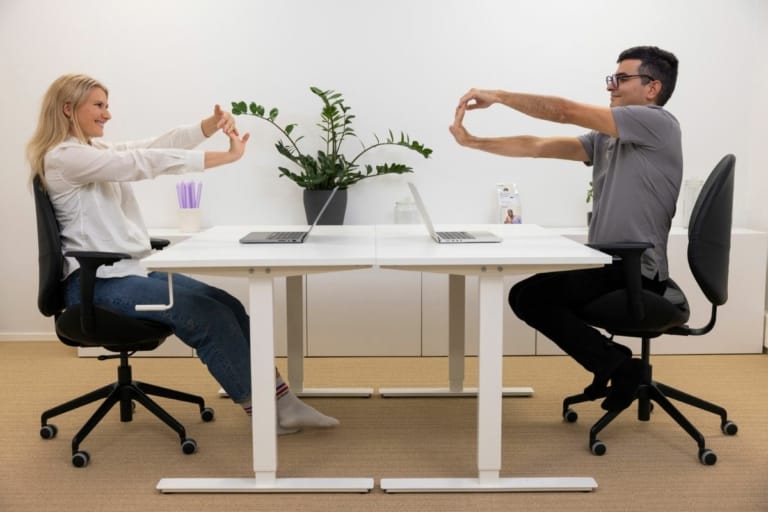
Active breaks do not mean workouts or changing clothes. They are small moments of movement built into the workday.

Examples include:

  • stretching shoulders or hips
  • standing up and moving for a few minutes
  • short walks
  • simple breathing exercises combined with posture change

These short active breaks at work support recovery because they activate the body without draining energy. Instead of taking energy away, they often give it back.

Employees who move regularly during the day often notice they feel less stiff, less stressed, and more capable of focusing. Importantly, they also report having more energy left after work.

What this means for HR and team leads

For HR decision makers and team leads, supporting breaks at work is about enabling better work. According to Calm, the most common things that keep workers from taking breaks are being too busy, looking unproductive to other people and feeling guilty about taking a break during working hours. 

This is where HR and team leads need to act and start building a culture where taking breaks is seen as a regular part of the day and a way to be a better employee.

When breaks are built into everyday routines, employees do not have to choose between performance and wellbeing, but the two support each other.

How Cuckoo supports better breaks at work

Cuckoo helps employees take short, well-timed breaks at work that include light movement, recovery moments, and simple activities that fit into daily schedules. The focus is not on doing more, but on doing small things consistently.

By supporting breaks throughout the day, Cuckoo helps:

  • increase daily activity without extra effort
  • reduce mental and physical fatigue
  • stabilise energy levels
  • support better recovery both during and after work

When breaks at work are taken regularly and include movement, the effects go beyond the workday. Employees often experience better focus during work hours, less stress accumulation, more energy in the evening, and improved long-term work ability.

If your organisation wants to improve focus, recovery, and energy beyond the workday, start with the basics. Support breaks that include light activity and make them easy to take.

Try Cuckoo with your team for free and see how small, well-timed breaks can improve energy, recovery, and everyday work.

Stay in the loop

Subscribe to our newsletter and be the first to get updates on latest content on workplace wellbeing and new Cuckoo features.

By submitting the form, you accept our privacy policy.