Facebook pixel

Cognitive fatigue is an early signal of reduced work ability

It’s 15:00. You’re still working, but thinking feels heavier. Concentration slips. Decisions take more effort.

This isn’t just a long day. It’s cognitive fatigue.

In many workplaces, mental exhaustion is treated as a normal side effect of modern work. Long days of meetings, constant context switching, and afternoon mental fog are seen as part of the job.

Still, they shouldn’t be.

Cognitive fatigue is one of the earliest and most telling signals of declining work ability. Long before sick leave increases or performance visibly drops, mental exhaustion begins to shape how people think, decide, and interact at work.

For HR leaders and team leads, this makes cognitive fatigue an issue that deserves attention now.

Cognitive fatigue doesn’t announce itself loudly

Unlike physical exhaustion, cognitive fatigue is subtle. It rarely stops people from working altogether. Instead, it quietly lowers the quality of work.

Employees are still performing.
But the cost increases:

  • more effort
  • less clarity
  • slower recovery

Decision-making becomes harder. Focus fragments more easily. Emotional regulation weakens. Over time, this leads to disengagement, mistakes, and growing strain.

The challenge is that many of these signals are easy to explain away as temporary busyness or individual stress. In reality, they often reflect a deeper mismatch between cognitive demands and recovery during the workday.

Work ability rarely collapses suddenly. It erodes quietly.

Knowledge work places continuous demands on the brain

Modern knowledge work is cognitively intensive by default. It requires sustained attention, problem-solving, learning, and social interaction — often without clear pauses between tasks.

Research shows the brain is not designed for continuous high-level cognitive load without recovery. Prolonged mental effort:

  • reduces decision quality
  • increases error rates
  • impairs collaboration

Yet workdays are still structured as if attention were an unlimited resource.

Add prolonged sitting and physical inactivity to the mix, and the strain increases further. The World Health Organization identifies physical inactivity as a major risk factor for both physical and mental health. In working populations, long sedentary periods are closely linked to reduced alertness and increased fatigue.

Why organisations react too late

Most organisations monitor work ability through lagging indicators. Sickness absence rates, employee surveys, and turnover figures provide valuable insights — but they describe problems that have already developed.

Cognitive fatigue operates earlier in the timeline. By the time it shows up in formal metrics, it has often been present for months or even years.

Another reason for late reactions is cultural. Many workplaces still reward endurance and constant availability. Breaks can be perceived as optional, or even as a lack of commitment, despite strong evidence of their benefits.

As a result, employees are left to manage cognitive load individually. Recovery shifts to personal time, and outcomes become uneven.

By the time fatigue appears in sick leave data, it has often been present for a long time.

Recovery during the workday supports cognitive performance

A growing body of research points to the same conclusion: the brain needs regular pauses to function well.

Short breaks, light physical activity, and moments of mental detachment support:

  • attention
  • memory
  • emotional regulation

Studies from organisations like the UKK Institute show that even brief bouts of movement improve circulation and alertness, directly supporting cognitive performance.

The key insight is not that people should work less, but that recovery should be a normal component of the workday.

Attention is not an unlimited resource. Recovery is part of performance.

From awareness to everyday support

Most HR leaders and team leads are already aware of cognitive overload as a concept. The gap lies in execution.

Smarter support means moving from occasional wellbeing initiatives to daily structures that reduce cognitive fatigue as it emerges. This includes:

  • clear signals to pause between demanding tasks
  • regular opportunities for movement during the day
  • support for mental reset between meetings
  • data-driven insight into how workdays actually unfold

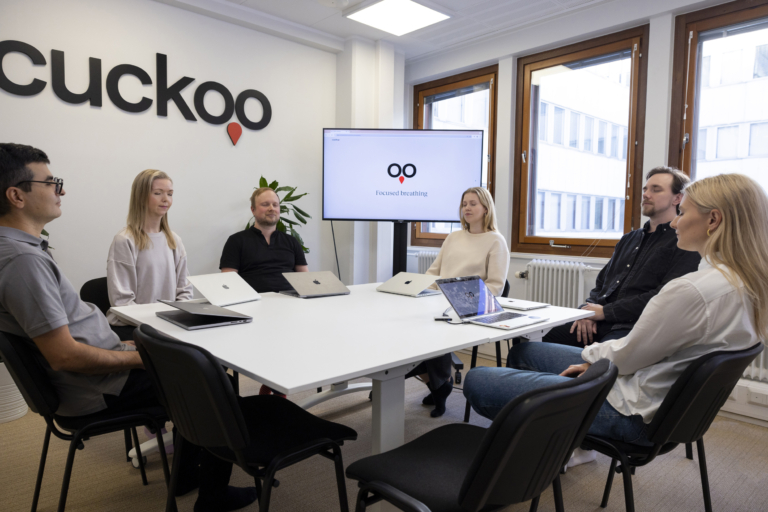
Tools like Cuckoo fit naturally into this picture. Cuckoo integrates recovery and light activity into real workdays through context-aware prompts aligned with cognitive rhythms rather than interrupting them.

Instead of relying on individuals to remember breaks, support becomes shared and systematic. Cognitive fatigue can be addressed early, before it develops into reduced work ability.

A leadership question worth asking

For leaders responsible for sustainable performance, the question is not whether cognitive fatigue exists. It is already present in most knowledge-based roles.

The real question is whether it is recognised as an early signal — or tolerated as a norm.

When cognitive fatigue is addressed early, work ability can be protected, performance stabilised, and recovery brought back into the workday where it belongs.

That shift does not require radical change. But it does require smarter support built into how work actually happens.

Book a demo

By submitting the form, you accept our privacy policy.