Facebook pixel

Work ability is declining earlier than we think, and it’s an opportunity for smarter support

For a long time, work ability has been treated as a late-career issue. Something that weakens gradually after decades of work and is addressed through rehabilitation, sick leave, or early retirement discussions.

That picture is no longer entirely accurate.

Today, signs of declining work ability are appearing much earlier in working life. Not only among ageing employees, but increasingly among people in their 30s and 40s, especially in knowledge-intensive roles. Fatigue, reduced concentration, musculoskeletal issues, and mental overload are no longer exceptions. They are becoming part of everyday work.

The good news is that this shift also creates an opportunity. If work ability is declining earlier, support can start earlier too. And when support is built into everyday work, the impact can be significant.

Work ability is changing and our assumptions are lagging behind

Work ability has traditionally been understood as the balance between an employee’s resources and the demands of work. The concept itself is still valid, but the nature of work has changed faster than our support models.

Knowledge work today is continuous, fragmented, and cognitively demanding. Workdays are filled with meetings, context switching, constant notifications, and long periods of sitting. Recovery is often postponed to evenings, weekends, or holidays.

Research increasingly shows that this model is not sustainable.

According to the Finnish Institute of Occupational Health, perceived work ability has weakened in several employee groups, and mental strain has become one of the key drivers behind reduced work capacity. Similar signals appear across Europe.

In working populations, inactivity and prolonged sitting are closely linked to reduced energy levels, musculoskeletal pain, and impaired cognitive performance.

In other words, declining work ability is no longer only about ageing or illness. It is about how work is structured and how little space there is for recovery during the workday itself.

The early signs are easy to miss and expensive to ignore

One of the challenges for HR and team leads is that early work ability decline does not always look dramatic. It rarely starts with long sick leaves.

Instead, it shows up as:

  • slower recovery from normal workdays
  • difficulty maintaining focus in the afternoon
  • increased irritability or emotional fatigue
  • more frequent short absences
  • reduced engagement over time

Research has repeatedly shown that cognitive fatigue reduces decision quality, increases errors, and weakens collaboration. Yet many organisations still measure productivity mainly through output, not through the conditions that make high-quality output possible.

When work ability erodes gradually, organisations tend to react late. Support is introduced when problems are already visible in sickness absence statistics or employee surveys. At that point, interventions are often heavier, more expensive, and harder to scale.

Movement and recovery are enablers of performance

There is strong evidence that short, regular breaks and light physical activity during the workday support both physical and cognitive work ability.

Studies show that even brief moments of movement improve circulation, reduce musculoskeletal strain, and support alertness. Cognitive research points in the same direction: the brain benefits from pauses, especially during mentally demanding tasks.

The key insight is not that employees should exercise more in their free time. It is that workdays should be designed to include recovery as a normal part of working.

Smarter support starts with the workday

Smarter support means shifting the focus from reactive wellbeing measures to proactive, daily support. From asking employees to cope longer, to helping them recover better throughout the day.

This is where technology can play a meaningful role.

Tools like Cuckoo are built around the idea that recovery and activity should be integrated into real workdays. Not as generic reminders, but as context-aware, timed nudges that fit different roles, workloads, and rhythms.

Instead of only telling people to “remember to take breaks”, Cuckoo supports:

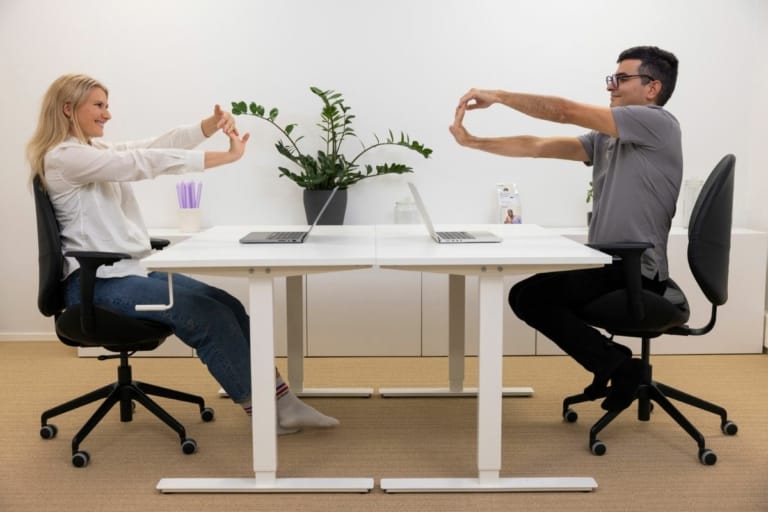
  • short, guided active breaks during cognitively demanding days
  • regular movement that counters prolonged sitting
  • micro-moments between meetings

For HR and team leads, this shifts the conversation. Work ability becomes something that can be supported daily, measured over time, and improved systematically.

A leadership question worth asking now

The key question is no longer whether work ability is declining. The data already points in that direction.

The real question is when support starts.

Does it start after problems become visible, or while people are still performing well but beginning to feel the strain?

Declining work ability is a serious challenge. But it is also an opportunity to rethink how work is supported, how recovery is valued, and how performance is sustained over time.

Book a demo

By submitting the form, you accept our privacy policy.